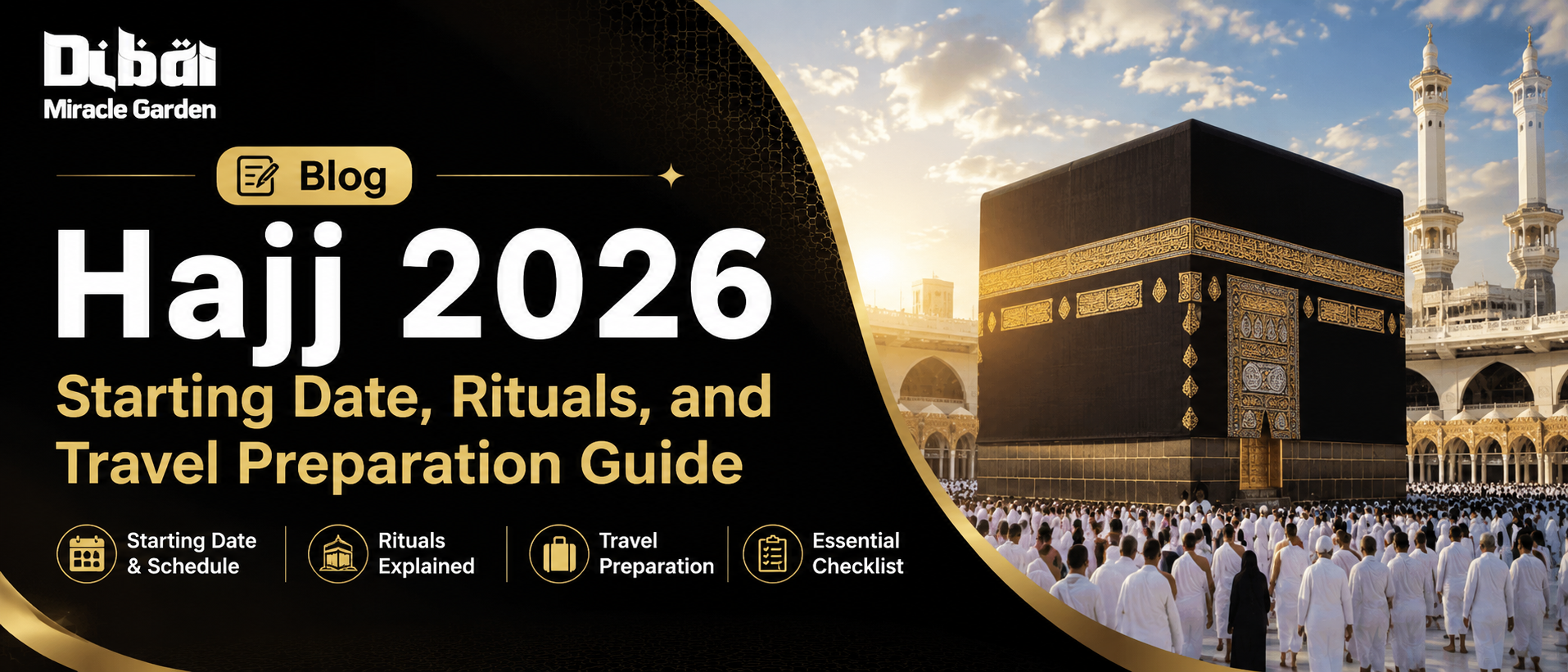
Hajj 2026 Starting Date, Rituals, And Travel Preparation Guide
Introduction
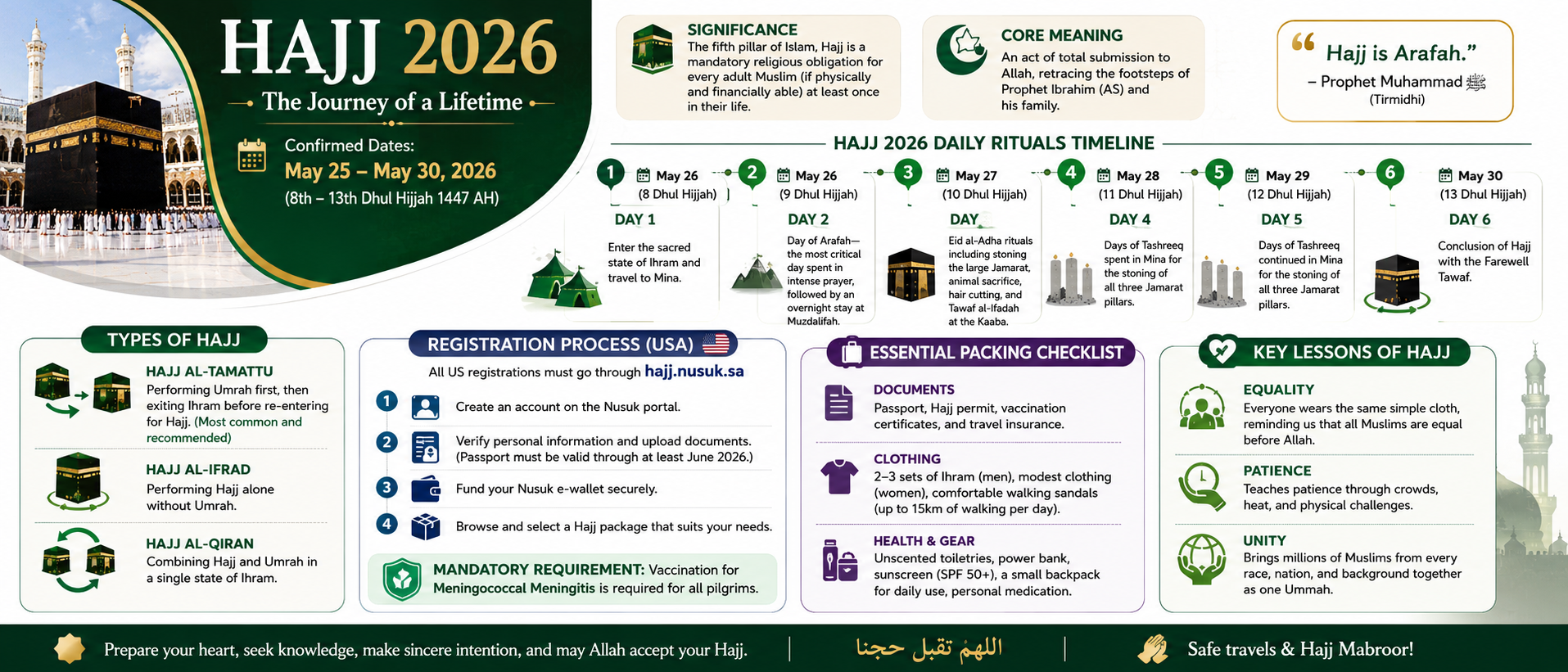
The Hajj 2026 starting date is officially confirmed as Monday, May 25, 2026 (8th Dhul Hijjah 1447 AH), with the pilgrimage concluding on Saturday, May 30, 2026. Whether you are preparing to go for the first time or helping a loved one get ready, this guide covers everything — from what Hajj actually means to how to register, what to pack, and what to expect spiritually and physically.
I performed Hajj a few years ago. It changed me completely. Nothing I had read or watched prepared me for the moment I first saw the Kaaba. My eyes filled with tears before I even realized it. I am writing this so that you can go in fully prepared — not just logistically, but spiritually too.
What Is a Muslim Pilgrimage? — For Those Who Are New to This
For friends, family members, or anyone who is not Muslim and is reading to understand what their loved one is going through:
A Muslim pilgrimage refers specifically to Hajj — the annual journey to Makkah, Saudi Arabia. It is one of the most profound acts of worship in Islam and has been performed for over 1,400 years.
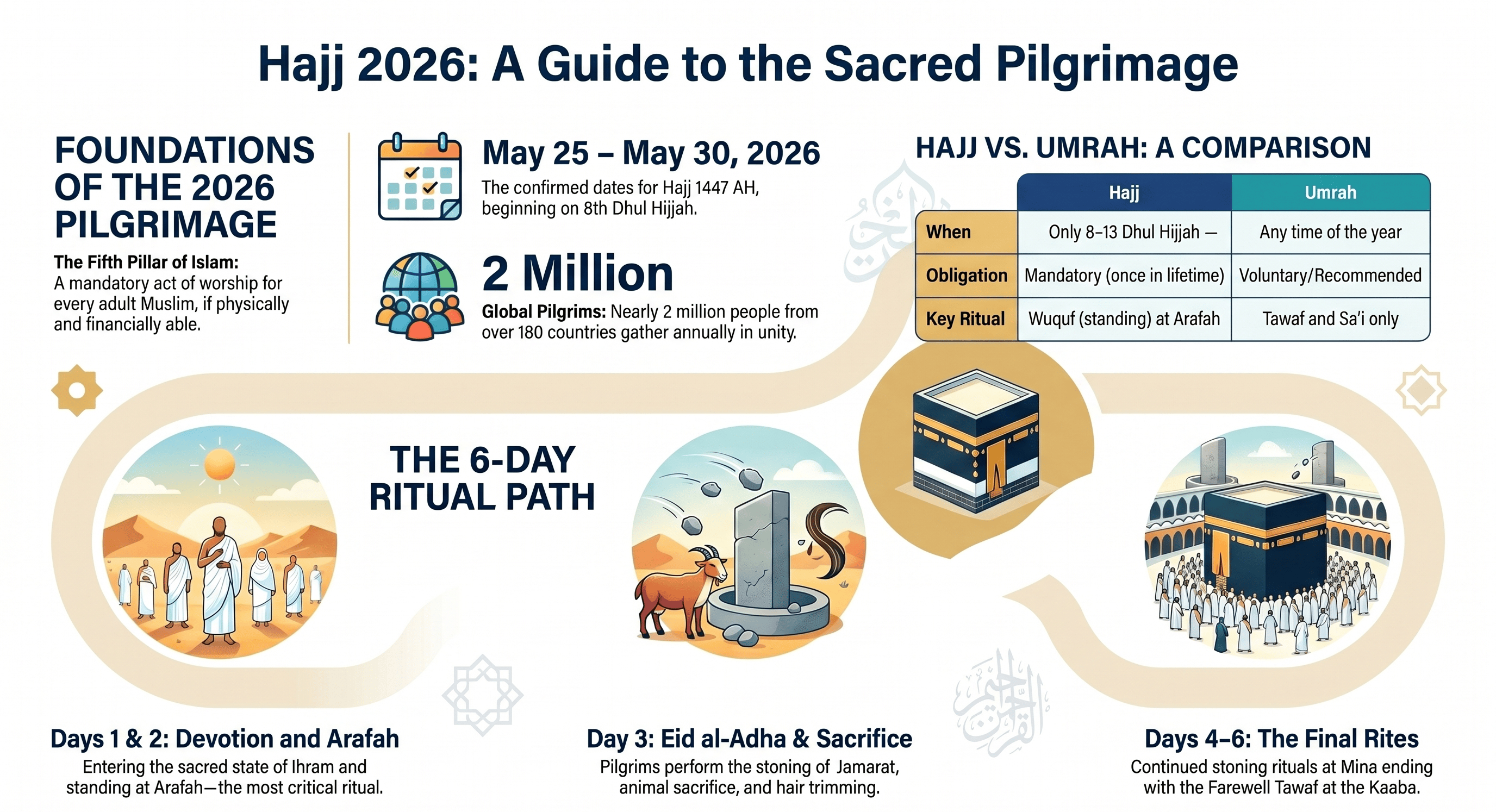
Every year, nearly 2 million Muslims from over 180 countries gather in the same place, at the same time, in the same simple white clothing. It is the largest annual gathering of people on Earth.
The pilgrimage follows the path of Prophet Ibrahim (Abraham) (AS) — retracing his footsteps, his faith, and his sacrifice. Hajj is ultimately about standing before your Creator with nothing but sincerity.
What Is Hajj? Understanding the Meaning and Purpose
Let’s be clear on what we are actually doing before talking about dates and packages.
What does Hajj mean?
The Arabic word “Hajj” (حَجّ) means purpose, destination or aim. It is the yearly Muslim pilgrimage to Makkah, one of the holiest cities in the world, in Saudi Arabia.
What is Hajj and how important it is?
The fifth pillar of Islam is Hajj. It is a religious obligation that every adult Muslim must fulfill at least once in his or her life if able to undertake it physically and financially.
The Holy Prophet (PBUH) said:
"O people! Hajj is made obligatory upon you by Allah, so perform Hajj."
Here’s why Hajj matters so deeply:
- It is an act of worship and total submission to Allah (SWT) directly
- It brings together Muslims from all countries, races and backgrounds in one place dressed in the same simple white clothing – there is no rich or poor in those moments
- It traces the steps of Prophet Ibrahim (AS), his wife Hajar and their son Ismail (AS)
- It also provides an opportunity for total forgiveness of sins — the Prophet (PBUH) said that someone who does Hajj sincerely comes back as clean as the day he or she was born.
- It teaches patience, humility, gratitude and sacrifice in a way that no lecture or book ever can
Hajj is done to honour Allah and in remembrance of the rituals of Prophet Abraham.
It is the complete surrender of yourself – body, mind and soul – to Allah alone.
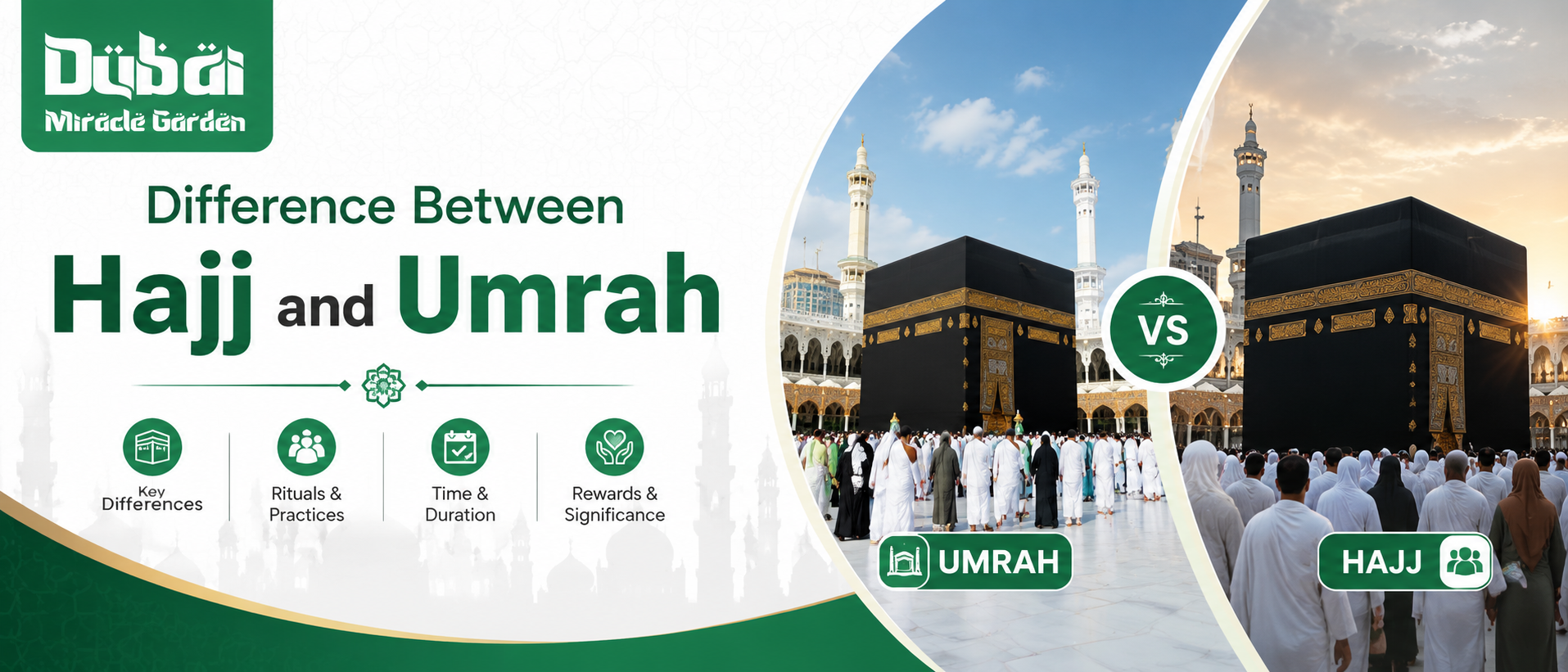
What Is the Difference Between Hajj and Umrah?
Many people ask: what is difference between Hajj and Umrah and are they the same thing?
Here is a simple comparison:
| Feature | Hajj | Umrah |
| When performed | Only during Dhul Hijjah (8–13) | Any time of the year |
| Obligation | Mandatory (once in lifetime) | Highly recommended, not obligatory |
| Duration | 5–6 days | Can be done in a few hours |
| Key rituals | Wuquf at Arafah, Muzdalifah stay, stoning of Jamarat | Tawaf, Sa'i, and shaving/cutting hair |
| Scale | 1.5–2 million pilgrims at once | Millions throughout the year |
What is umrah?
It is a shorter, voluntary pilgrimage that includes Tawaf (circling the Kaaba), Sa'i (walking between Safa and Marwa), and trimming the hair. It is sometimes called the "minor pilgrimage."
Hajj 2026 Confirmed Dates — Official Schedule
The Saudi Supreme Court confirmed the sighting of the Dhul Hijjah crescent on May 17, 2026, making May 18 the first day of Dhul Hijjah 1447 AH.
Here is the complete Hajj 2026 date schedule:
| Day | Islamic Date | Gregorian Date | Ritual |
| Day 0 | 7 Dhul Hijjah | Sunday, May 24 | Arrive in Makkah, prepare |
| Day 1 | 8 Dhul Hijjah | Monday, May 25 | Hajj begins — Travel to Mina (Yawm al-Tarwiyah) |
| Day 2 | 9 Dhul Hijjah | Tuesday, May 26 | Day of Arafah — The most important day |
| Day 3 | 10 Dhul Hijjah | Wednesday, May 27 | Eid al-Adha — Muzdalifah, stoning, sacrifice, shaving |
| Day 4 | 11 Dhul Hijjah | Thursday, May 28 | Days of Tashreeq — stoning of three Jamarat |
| Day 5 | 12 Dhul Hijjah | Friday, May 29 | Stoning continues |
| Day 6 | 13 Dhul Hijjah | Saturday, May 30 | Hajj ends — Farewell Tawaf |
Important note: All Hajj dates follow the Islamic lunar calendar and are confirmed by the official moon sighting in Saudi Arabia. The dates above are confirmed for Hajj 2026.
Hajj 2026 Rituals — Day-by-Day Breakdown
Day 1 — Yawm al-Tarwiyah (8 Dhul Hijjah): Enter Ihram, Go to Mina
This is the first day of Hajj. Here is what happens:
- Perform Ghusl (full body wash) and enter Ihram — the sacred state
- Men wear two white seamless sheets (Izar and Rida); women wear modest clothing covering the body
- Make the intention (Niyyah): "Labbayk Allahumma Hajjan" — O Allah, I answer Your call by performing Hajj
- Begin reciting the Talbiyah continuously:
"Labbayk Allahumma labbayk. Labbayk la shareeka laka labbayk. Innal-hamda wan-ni'mata laka wal-mulk. La shareeka lak." (Here I am O Allah, here I am. Here I am, You have no partner, here I am. Verily all praise, grace, and sovereignty belong to You. You have no partner.) - Travel approximately 8 km to Mina and spend the night there
- Offer all five prayers — shortening the four-unit prayers to two units (Qasr)
My personal note: The first time I put on my Ihram, something shifted inside me. There's a humility in wearing what every other person is wearing — no brands, no status, just a servant of Allah.
Day 2 — Yawm Arafah (9 Dhul Hijjah): The Heart of Hajj
This is the most important day of the entire pilgrimage — and arguably the most important day in the Islamic year.
- After Fajr, travel from Mina to the Plain of Arafah (about 14.4 km from Makkah)
- Stand (Wuquf) at Arafah from after Dhuhr until after Maghrib — this is the central pillar of Hajj
- Pray Dhuhr and Asr together, shortened (Qasr) and combined (Jam') at the time of Dhuhr
- Make sincere du'a, weep, seek forgiveness, and remember Allah intensely
- The Prophet (PBUH) said: "Hajj is Arafah" — if you miss Arafah, your Hajj is invalid
- After sunset, proceed to Muzdalifah without praying Maghrib along the way
- Pray Maghrib and Isha together at Muzdalifah
- Collect 49 to 70 small pebbles for the stoning rituals
- Sleep under the open sky at Muzdalifah — one of the most powerful nights of my life
My personal note: I stood at Arafah and cried like I hadn't cried since childhood. Around me were two million people in white — all asking Allah for forgiveness. You feel, without any doubt, that this is the closest you will ever come to the Day of Judgment while still alive.
Day 3 — Yawm al-Nahr (10 Dhul Hijjah): Eid al-Adha
After Fajr at Muzdalifah, the following rituals are performed (and they can be done in flexible order):
- Rami (Stoning): Throw 7 pebbles at the large Jamarat (Jamarat al-Aqabah), saying "Allahu Akbar" with each throw
- Hady (Sacrifice): An animal is sacrificed, commemorating Prophet Ibrahim's willingness to sacrifice his son. This is usually arranged through authorized services in advance.
- Halq or Taqsir (Hair cutting): Men shave their heads completely (Halq) or trim their hair. Women cut a fingertip-length from their hair. This marks exiting the first phase of Ihram.
- Tawaf al-Ifadah: Travel to Masjid al-Haram and perform the essential Tawaf of Hajj — circumambulate the Kaaba 7 times
- Sa'i: Walk 7 times between Safa and Marwa (if not done before)
- Return to Mina for the night
Days 4–5 — Ayyam al-Tashreeq (11–12 Dhul Hijjah): Days of Mina
These are the "Days of Tashreeq." Pilgrims remain in Mina and:
- Stone all three Jamarat each day after Dhuhr time:
- Small Jamarat (Jamarat al-Ula) — 7 pebbles
- Medium Jamarat (Jamarat al-Wusta) — 7 pebbles
- Large Jamarat (Jamarat al-Aqabah) — 7 pebbles
- Say "Allahu Akbar" with each throw
- Spend nights in Mina
- A pilgrim may leave Mina on the 12th before sunset (Early Departure) — this is allowed
Final Day — Tawaf al-Wida (Farewell Tawaf)
Before leaving Makkah, every pilgrim must perform the Farewell Tawaf — 7 circles around the Kaaba. This is the last ritual of Hajj.
My personal note: This was the hardest moment. Walking away from the Kaaba, looking back one last time — I made du'a that Allah would bring me back. I think every pilgrim does.
Three Types of Hajj — Which One to Perform?
| Type | What It Means | Sacrifice Required? |
| Hajj al-Tamattu | Perform Umrah first, exit Ihram, then re-enter Ihram for Hajj | Yes |
| Hajj al-Ifrad | Perform only Hajj without Umrah | No |
| Hajj al-Qiran | Perform Hajj and Umrah combined in a single Ihram | Yes |
Recommended: Hajj al-Tamattu is what the Prophet (PBUH) encouraged his companions to perform. It is the most common type for pilgrims traveling from outside Saudi Arabia.
Is There a Specific Time for Hajj?
Yes — absolutely. Unlike Umrah, Hajj can only be performed during specific days.
- Hajj takes place on the 8th, 9th, 10th, 11th, 12th, and 13th of Dhul Hijjah — the 12th and final month of the Islamic lunar calendar
- The most critical day is the 9th of Dhul Hijjah (Day of Arafah) — missing this day means your Hajj is invalid
- Hajj happens once a year — there is no making it up if you miss it that year
In 2026, these dates fall between May 25 and May 30.
How to Apply for Hajj 2026 from the USA
This is the section most American Muslims need most — and most other blogs get wrong or leave incomplete.
The only official platform for Hajj registration from the USA is: 👉 hajj.nusuk.sa (the Nusuk Hajj portal by Saudi Ministry of Hajj and Umrah)
⚠️ Important: The regular Nusuk app (used for Umrah bookings) is NOT connected to the Hajj application process. Use only the Hajj website.
Step-by-Step Hajj 2026 Registration from the USA
Step 1 — Create your Nusuk Hajj account
- Go to hajj.nusuk.sa
- Register with a valid email and phone number
- Upload a passport-style photo
Step 2 — Verify your documents
- Valid US passport (must be valid at least 6 months past your return date — so valid through late June 2026 or beyond)
- Proof of US residency or citizenship
- Vaccination records (Meningococcal Meningitis vaccine is mandatory; Yellow Fever if traveling from endemic countries)
Step 3 — Fund your Nusuk e-Wallet
- Add funds before packages go live — they sell out fast
Step 4 — Select a Hajj 2026 package
- Filter by price, accommodation type, and proximity to Masjid al-Haram
- US pilgrims can expect packages ranging from approximately $10,500 to $15,000 for full-service options with 5-star hotels and guided services
Step 5 — Get your Hajj visa
- Visa issuance for 2026 began in February; it is tied to your approved package
- Entry to holy sites without a Hajj permit or on a tourist visa is strictly prohibited
Top US-Based Hajj Operators (2026)
- Sara International Travel
- Dar El Salam Travel (DST World Travel)
- Hisar Tour
- Bismillah Travel
These operators are Nusuk-approved and assist with the full process — from account creation to in-country support.
Hajj 2026 Packing List — What Do I Need for Hajj?
Preparing the right items makes a real difference. Here is a practical packing list:
Essential Documents
- Valid passport
- Hajj visa and permit printout
- Vaccination certificate (Meningitis is mandatory)
- Travel insurance documents
- Emergency contact card
Ihram and Clothing
- 2–3 sets of Ihram (men) — seamless white cloth (Izar and Rida)
- Modest full-coverage clothing (women)
- Comfortable walking sandals (no heels, no closed shoes while in Ihram for men)
- Lightweight abaya or loose modest clothing (for outside Ihram)
- Ihram belt to hold garments in place
Health and Physical Prep
- Prescribed medications (enough for the full trip plus extra)
- Blister plasters — you will walk up to 15 km per day
- Sunscreen (SPF 50+) — Makkah in May is very hot
- Oral rehydration salts
- Small first aid kit
- Unscented soap, shampoo, deodorant (no fragrances allowed during Ihram)
- Face mask (crowds are dense)
Practical Items
- Small backpack or waist bag for daily use
- Phone with offline Quran and Hajj guide apps
- Power bank (essential)
- Saudi SIM card or international roaming plan
- Cash in Saudi Riyals (SAR) and a backup card
- Small prayer mat (lightweight)
- Zamzam water container
- Pebble collection bag for Jamarat stoning
Spiritual Preparation
- Pocket-size Quran
- Du'a book with Hajj supplications
- Talbiyah memorized (write it on a card if needed)
- Settle all debts and seek forgiveness from anyone you may have wronged before departure
- Make a will (recommended before Hajj)
What to Say When Someone Is Going to Hajj
This is one of the most commonly asked questions, and the answer is beautiful.
When someone you love is about to leave for Hajj, the Sunnah du'a to say is:
"Zawwadakallahu at-taqwa, wa ghafara dhanbaka, wa yassara laka al-khayr haythu ma kunta."
(May Allah provide you with taqwa as your provision, forgive your sins, and make good easy for you wherever you are.)
You may also simply say:
- "Hajj Mabroor" — May your Hajj be accepted and blessed
- "Taqabbal Allahu minna wa minkum" — May Allah accept from us and from you
When the pilgrim returns, it is Sunnah to greet them and ask them to make du'a for you, as their du'as after a Mabroor (accepted) Hajj carry special weight.
What Does Hajj Teach Us?
Hajj is more than just a physical journey, it changes you internally. This is what it really teaches:
- Equality: In Ihram, there are no differences between a president and a street vendor. They all wear the same simple cloth.
- Patience: You will be in crowds, walk long distances in heat and you will wait. Hajj teaches the soul to be patient without complaint.
- Gratitude: You become truly grateful when you see pilgrims from countries with far less than yours who have saved their whole lives for this journey.
- Submission: Hajj is the physical manifestation of "I am nothing, and Allah is everything.
- Community: Standing at Arafah with nearly two million Muslims — Indonesians, Nigerians, Turks, Americans, Pakistanis — all as one, reminds you that Islam is for all of humanity
Final Words — From One Pilgrim to Another
If you are going for Hajj 2026, you are about to experience something that no words can fully capture. The Hajj 2026 starting date of May 25 is not just a calendar date — it is the beginning of what could be the most transformative days of your life.
Go with a clean heart. Seek forgiveness before you leave. Do not argue, do not be impatient — Hajj is a test of your character as much as your faith. Help the elderly pilgrim next to you. Drink Zamzam water and make the du'a you have been carrying inside for years. And when you stand at Arafah, know that millions of Muslims across history stood in that same valley asking Allah for the same thing: mercy.
May Allah accept all our efforts, grant us a Hajj Mabroor, and reunite us at the Kaaba. Ameen.
Sources for this guide include: IslamicFinder, Wego Travel Blog, Al-Mustafa Trust, Islamic Relief, Saudi Ministry of Hajj and Umrah (via Gulf News), Nusuk Hajj portal, and the Quran and authentic Hadith references cited throughout.